Food Cost Under Control: How Restaurants Reduce Losses Without Monthly Inventory Counts
Manual inventory counts show losses after the fact. We break down why they hide margin loss and walk through 5 operational solutions.
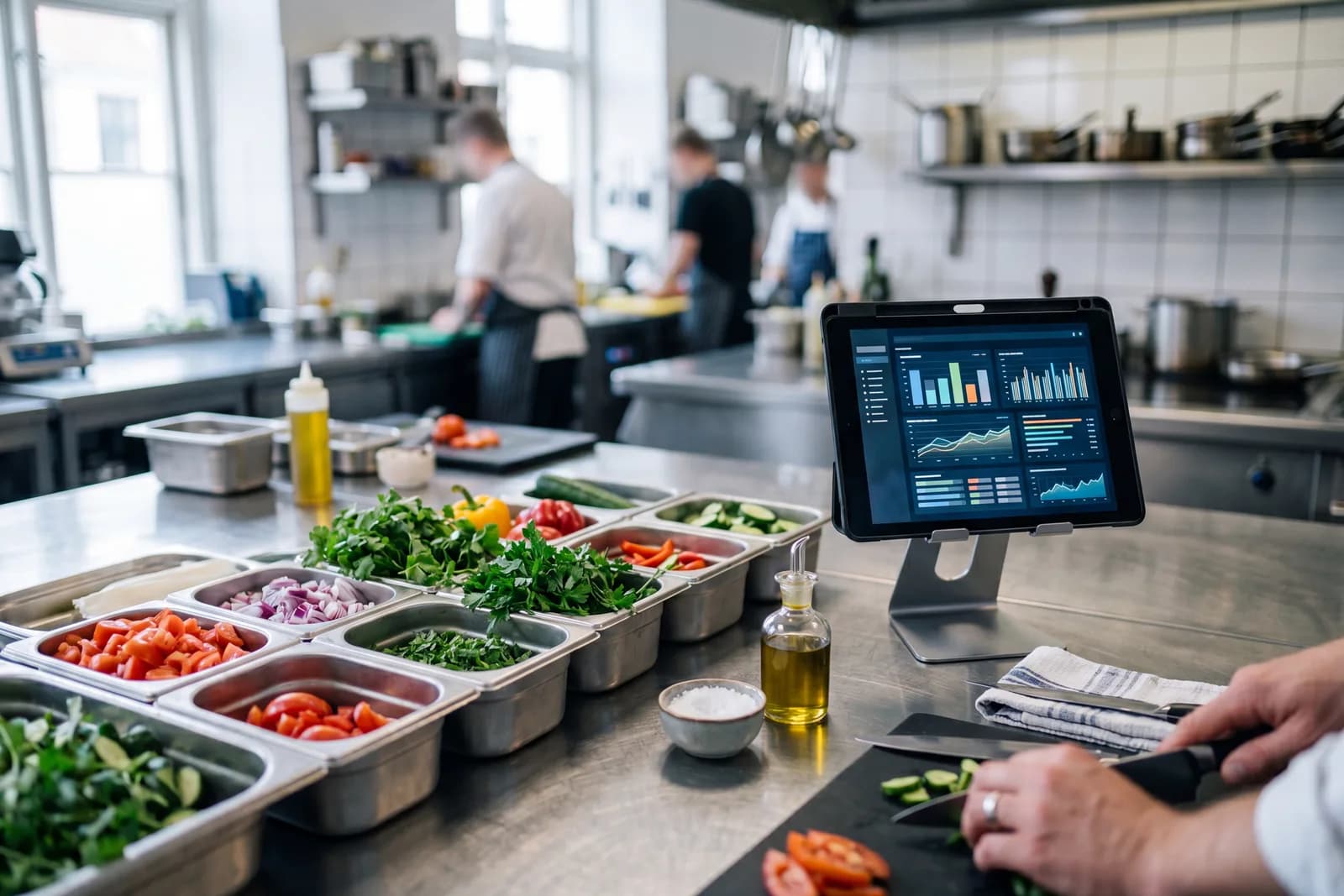
Product cost management remains a key factor for survival in the restaurant industry. Food cost is the largest line a venue can control day to day, and product prices keep rising — so every point lost to waste, over-portioning or theft comes straight out of margin.
The primary issue with cost management lies in data latency. The classical control workflow relies on periodic inventory counts. In a Backbar survey of 11,240 restaurant and bar workers, 52% said they take inventory weekly and 26% monthly (Backbar, 2025). A monthly cycle means the manager sees overspending or theft 30 days after the incident began. Under these conditions, it is impossible to adjust procurement quickly, modify portion sizes, or address issues with staff.
Despite the obvious need for data, the gap persists: in a survey of more than 300 multi-unit restaurant operators by Crunchtime and Technomic, 80% called real-time visibility into daily operations important, while only 36% actually have it (Crunchtime, 2025 Restaurant Growth Insights Report). The gap between the desire to control expenses and actual automation implementation leads to a systematic loss of profitability.
«80% of multi-unit restaurant operators call real-time visibility into daily operations important, yet only 36% actually have it.»
Why Monthly and Weekly Inventory Counts Do Not Solve the Problem
Traditional stock counts solve an accounting problem—recording a historical fact—but not a managerial one—preventing loss. When an inventory count reveals a shortage of premium steaks or a 15% salmon overage, the product is already lost. The operations manager only sees the final discrepancy figure, but does not understand which shift the error occurred in, whether it was line cook waste, a receiving discrepancy, or theft.
A weekly snapshot narrows the search window but still leaves room for manipulation and errors. Utilizing spreadsheets or basic systems without POS integration requires manual data entry. As a result, managers spend hours every month reconciling data by hand.
5 Operational Steps to Lower Food Cost Without Manual Inventory Counts
Transitioning from logging losses to preventing them requires implementing end-to-end data exchange between the front-of-house, kitchen, and warehouse.
5 steps to cut Food Cost without manual counts
- 1
POS–inventory integration
Every rung-up dish instantly deducts ingredients by recipe card, forming an "ideal stock" baseline.
- 2
Batch tracking and dynamic cost
FIFO calculates a dish’s cost at the moment of sale using the real invoices of the latest delivery.
- 3
Blind recount of the top 10 items
A daily 15-minute check of the priciest, fastest-moving ingredients surfaces variance the same day.
- 4
Digital logging of write-offs and prep
Three-tap write-offs at the terminal; the algorithm flags anomalies by shift.
- 5
Predictive purchasing
Order lists built from sales stats, seasonality and day of week — fewer surpluses and less spoilage.
Step 1. Direct integration of POS systems and warehouse modules. Every transaction rung up at the cash register must immediately deplete ingredients from inventory based on recipe specifications. This creates 'theoretical inventory'—a calculated metric of how much product should be in the kitchen at any moment. The discrepancy between theoretical and actual stock during spot checks instantly highlights problem areas.
Step 2. Implementation of batch tracking and dynamic costing. Supplier prices fluctuate daily. If the system depletes ingredients at an average or static price from the previous month, the calculated Food Cost will be distorted. The system must automatically apply the FIFO method to calculate the cost of each specific dish at the moment of sale, relying on the actual invoices of the latest delivery.
Step 3. Daily spot checks of top-10 items (Blind Inventory). Instead of closing the restaurant for a full inventory count, a practice of blind-counting the most expensive and high-turnover ingredients is introduced—alcohol, meat, seafood. A manager with a tablet counts 10–15 items in 15 minutes at the start or end of a shift. Since POS data updates in real time, any discrepancy is identified the same day.
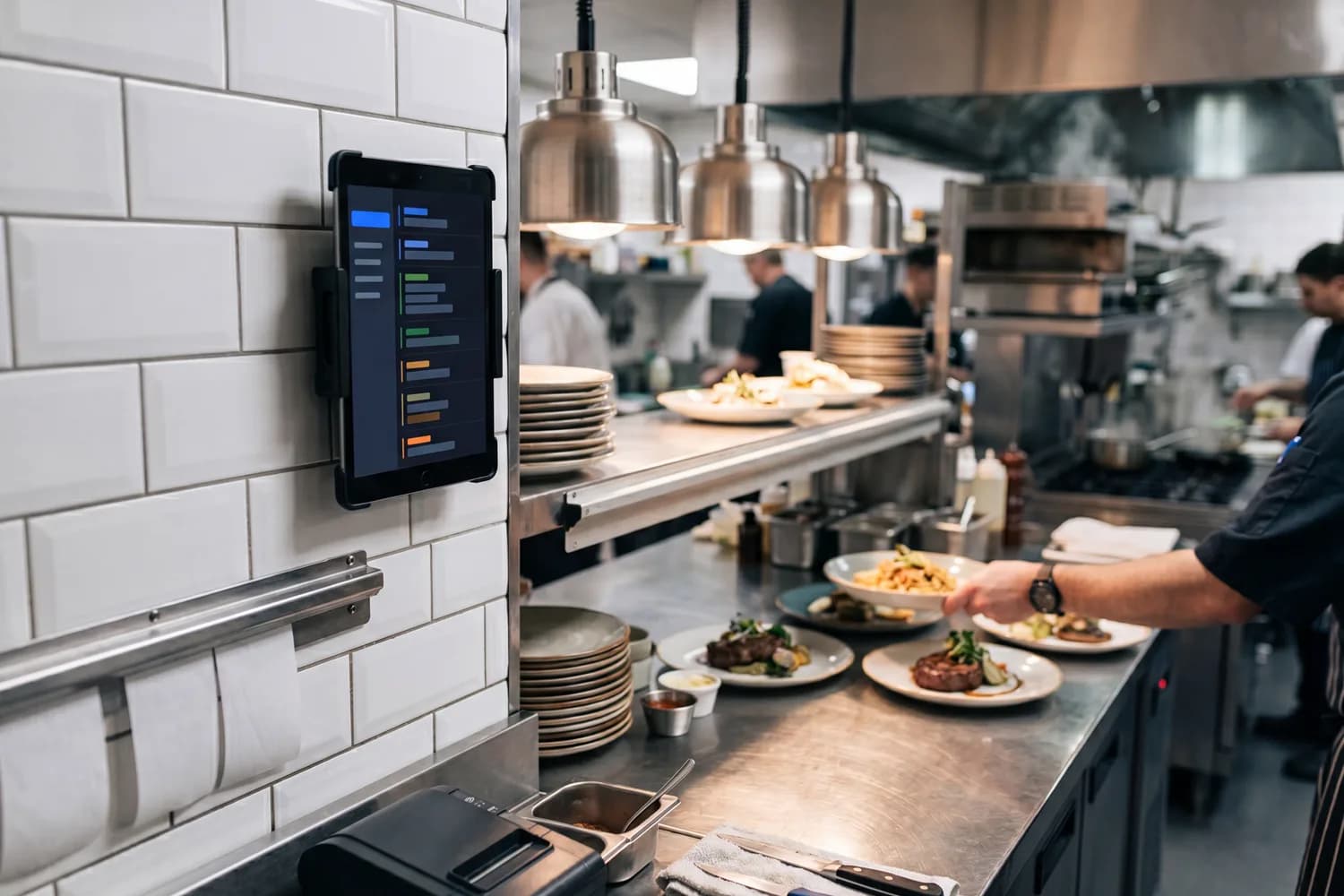
Step 4. Digital logging of waste and line prep. Unrecorded waste is a blind spot in food costs. If a cook drops a prep item, a guest returns a dish, or vegetables spoil—all of this must be logged on the kitchen terminal in three taps. When waste is digitized, the algorithm can identify anomalies: if the waste percentage due to spoilage doubles during a specific sous-chef's shift, it warrants a targeted audit.
Step 5. Predictive purchasing based on algorithms. Excess warehouse stock freezes working capital and leads to product spoilage. Inventory management systems can analyze sales history via the POS, accounting for seasonality, day of the week, and weather forecasts to generate precise purchase orders.
Profits Lie in Data, Not the Pantry
Reducing Food Cost by even 2% in a high-turnover venue yields a direct, proportional increase in net profits. Shifting to continuous stock control shifts the management team's focus from filling spreadsheets to analyzing processes. An integrated management ecosystem allows viewing the cost of each transaction in real time, quickly removing unprofitable items from the menu, and stopping leaks before they damage the monthly financial result.
Related articles
Want to apply this to your operation?
EFRION builds the automations described here — across POS, warehouse, and back-office operations.
Request a demo