Overbooking and Room Idle Time: How a Channel Manager Synchronizes Hotel Occupancy
How a channel manager syncs availability across every sales channel, prevents technical overbooking and returns cancelled rooms to sale.
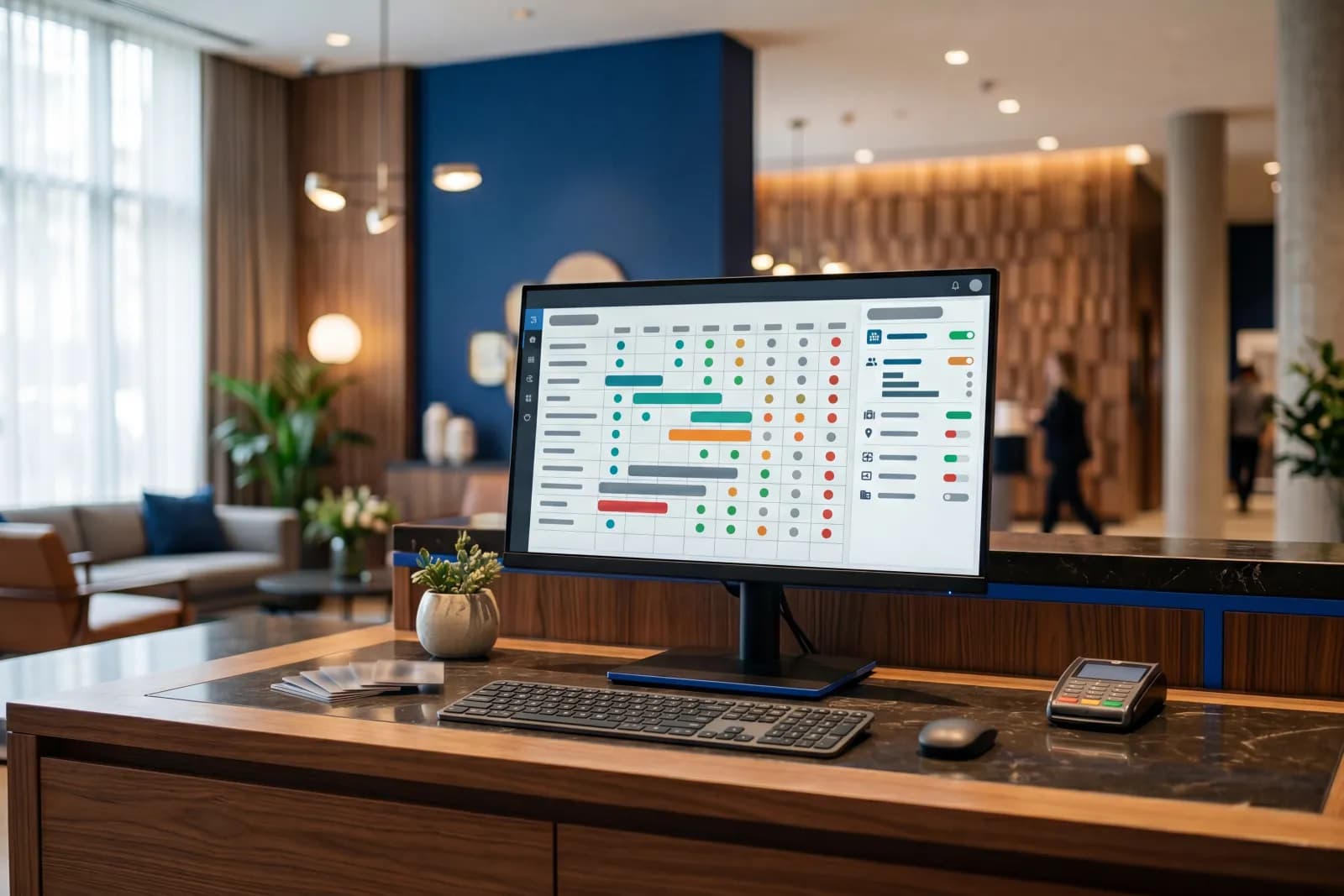
Distribution management in the hospitality business in 2025 requires instant reactions to changes in demand. A hotel utilizing more than five sales channels simultaneously (OTAs, own website, GDS, metasearch engines) faces the risk of technical overbooking—a situation where the same room is booked on different platforms within seconds of each other. Manual allotment management errors cost the hotel twice: in booking-platform penalties and in reputation. The solution to this problem is a Channel Manager—a technological layer that provides two-way data synchronization between the hotel's PMS and external booking platforms.
How it Works: From Manual Updates to a Single Dashboard
A Channel Manager operates on the Inventory Grid principle. The system's primary task is to maintain the real-time accuracy of room availability across all connected resources. When a guest books a room through a popular aggregator, the information flows to the Channel Manager, which instantly updates availability in the Property Management System (PMS) and across all other booking platforms. The update reaches every platform at once, which closes the window for selling the same room twice.
For a hotel manager, this means eliminating the need to manually log into the extranets of each platform. With frontline staff in short supply, automating routine operations becomes a critical factor. Front desk staff can redirect the time saved toward improving guest service quality, which directly impacts hotel ratings.
Synchronization covers not only availability but also rate plans. Modern systems allow configuring complex rules: for example, automatically closing sales on specific channels when 90% occupancy is reached, or applying different markups to compensate for OTA commissions. This provides yield management flexibility without increasing the sales department's headcount.
How a channel manager closes distribution risks
- 1
Two-way sync (Inventory Grid)
A booking from any platform updates availability in the PMS and across channels at once — there is no window to sell the same room twice.
- 2
Instant return of cancellations to sale
A room freed by a cancellation returns to every platform at once instead of sitting blocked.
- 3
Rate and quota rules
Auto-closing sales at 90% occupancy and OTA-commission markups — revenue management without adding headcount.
- 4
One-button Stop Sales
For a group arrival or event, sales close instantly across all external sources — stray bookings don’t disrupt logistics.
- 5
PMS and RMS integration
Bookings land straight on the grid without manual transfer, and dynamic-pricing recommendations broadcast to all channels in real time.
Fighting Overbooking and Its Financial Consequences
Overbooking can be strategic or technical. While strategic overbooking is a conscious risk taken by a hotel to offset no-shows, technical overbooking results from software glitches or slow synchronization. A walked guest costs the hotel the alternative accommodation and the transfer.
Besides direct financial costs for guest relocation, the hotel faces reputational risks. A negative review about overbooking stays on the platforms and is read by future guests. A Channel Manager removes the cause of technical overbooking — the delay between a sale on one channel and the availability update on the others.
The system also helps manage cancellations. Cancellations are routine on every channel. Without automation, a room after cancellation can remain blocked in the system, unavailable for sale. A Channel Manager returns it to the market across all channels instantly, minimizing room idle time and maximizing occupancy.
Maximizing RevPAR by Expanding Reach
RevPAR (Revenue Per Available Room) is the key performance metric for a hotel. Utilizing a Channel Manager allows connecting dozens of niche booking platforms without operational complexity.
Different channels attract different audiences. Global OTAs provide a stream of international travelers, local services capture domestic tourists, and specialized platforms (e.g., for business travel) secure a stable corporate segment. A Channel Manager allows distributing quotas so that during low-demand periods maximum resources are utilized, while on peak dates priority is given to channels with minimal commissions or direct bookings.
An important tool is the 'Stop Sales' function. If a hotel is booked out for a large event, the manager closes sales on all external resources with a single click. This ensures that accidental bookings do not disrupt group arrival logistics. Precision inventory management allows the hotel to run at full capacity without fear of operational chaos.
Integration with PMS and Revenue Management Systems
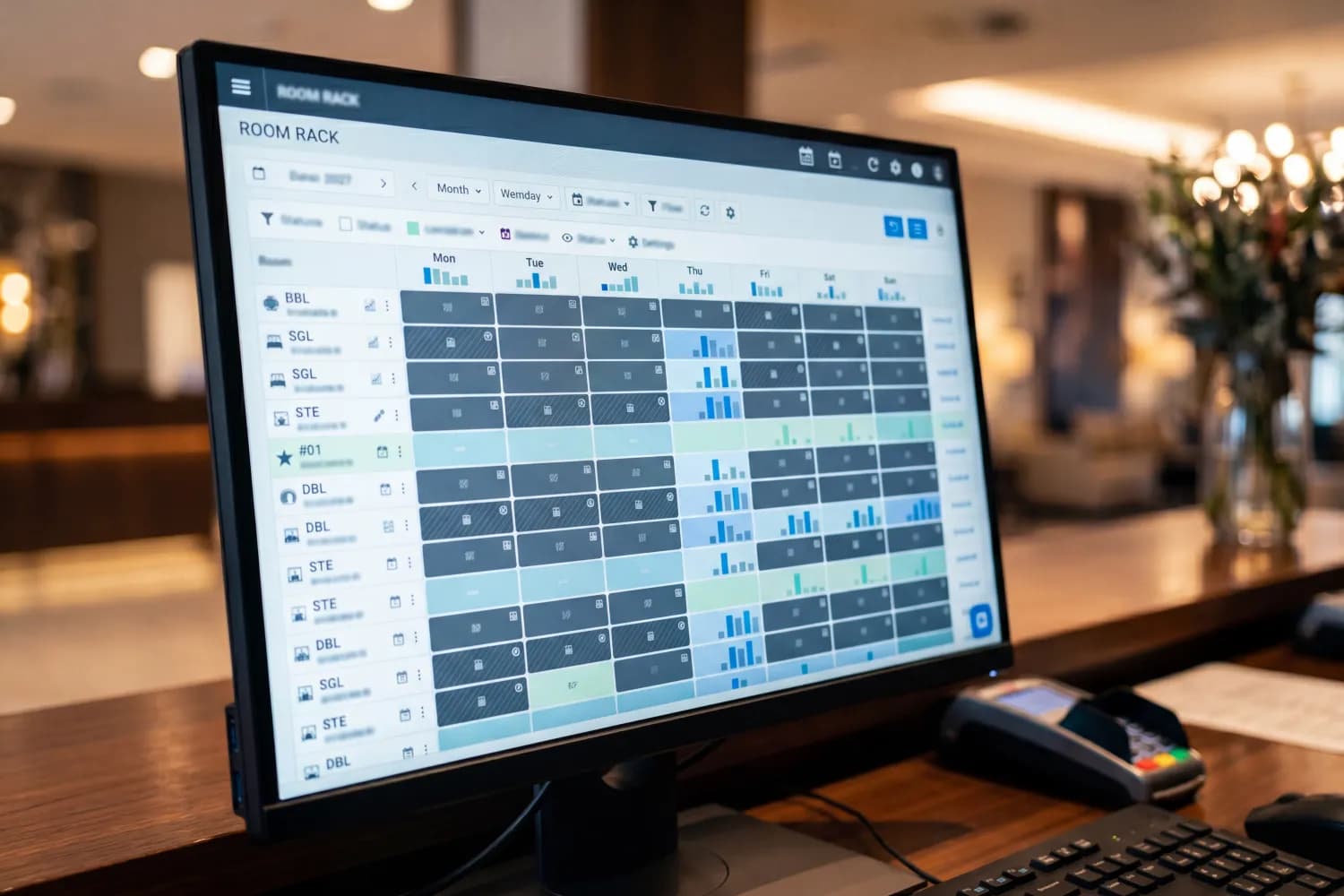
A Channel Manager is not an isolated product. Its maximum efficiency is achieved through seamless integration with a PMS (Property Management System). In this setup, booking data flows directly into the hotel's reservation grid, creating a guest profile and assigning a specific room. This eliminates manual data transfer errors — wrong dates, room type or guest count.
In 2025, integrating the Channel Manager with Revenue Management Systems (RMS) is becoming the standard. The RMS analyzes the market, competitor prices, weather, and historical data to recommend rate adjustments. The Channel Manager broadcasts these changes to all platforms in real time. This connection allows the hotel to automatically raise prices during a sudden surge in demand (for instance, when a major concert is announced in town) without waiting for a manager's response.
The 'Billboard Effect' also works in the hotel's favor. Visibility on multiple platforms increases brand awareness. Guests find the hotel on an aggregator but often visit the official website to complete the booking. A Channel Manager maintains accurate information everywhere, building the potential client's trust in the hotel's reliability.
Technical Requirements and System Selection Criteria
When choosing a Channel Manager, a manager should focus on several parameters:
- Number of direct integrations (XML connections) with channels. The more direct connections, the faster and more stable the system.
- Synchronization speed. Check how many seconds it takes for availability to update on every channel.
- User interface usability. Staff must quickly navigate restriction settings (MinLOS, Close to Arrival, etc.).
- Technical support quality. In a 24/7 hotel business, any disruptions require immediate resolution.
Data security is another priority. The system must comply with PCI DSS standards for the secure transmission of guest credit card details. Hotels hold guest payment data, which makes them a target for cyberattacks — and secure data encryption in a Channel Manager a basic requirement.
System cost usually varies based on room count and connected channels. Its return comes from overbooking losses that no longer happen and from additional bookings via new channels — calculate it on your own overbooking and cancellation data.
Distribution Analytics: Understanding Channel Profitability
A Channel Manager provides data for a deep analysis of sales channel performance. A manager can track:
- What share of revenue each channel contributes.
- The real cost of booking, accounting for commissions and processing expenses.
- The average daily rate (ADR) and length of stay (LOS) for guests from different sources.
This data enables an intentional distribution policy. If a channel brings many bookings but with high cancellation rates and short lengths of stay, the hotel can apply stricter booking rules to it. Management based on data rather than intuition is what distinguishes successful hotels in 2025.
For hotel chains, a Channel Manager allows central management of sales across multiple properties. This saves management resources and ensures uniform pricing standards. The ability to quickly replicate rate settings between properties reduces the time to bring new offers to market.
The Future of Distribution: Direct Bookings and AI
Despite the importance of OTAs, the long-term strategy of any hotel is aimed at growing direct bookings. A Channel Manager supports this by enabling price parity strategies or offering better terms on the official website. Integration with booking modules for social media and messengers opens new horizons in 2025.
AI within channel managers is beginning to perform predictive correction functions. The system can alert the manager if an abnormal activity spike is detected on a specific channel, which could indicate a technical error or an unrecorded market event.
Implementing a Channel Manager is not just about purchasing software; it is a transition to professional yield management. At a time when hotel margins are under pressure from rising operating expenses, sales automation is the only way to remain competitive and ensure sustainable growth.
Related articles
Want to apply this to your operation?
EFRION builds the automations described here — across POS, warehouse, and back-office operations.
Request a demo