The Leaky Sales Funnel: Why Deals Slip Away Between Stages
Leads slip away at the handoffs between funnel stages. Learn how CRM automation closes those gaps and shortens the sales cycle.

The Sales Management Crisis in the Age of Data Overload
The modern sales department faces a paradox: while incoming inquiries are increasing, the customer acquisition cost (CAC) is rising, and conversion rates to closed deals are stagnating. The problem often lies not in the quality of the leads, but in the architecture of their processing workflow. A 'leaky funnel' is a term describing the loss of potential clients at the intersections between sales stages due to a lack of systematic control.
For a Commercial Director, the key metric is not the number of calls, but the throughput capacity of the funnel. The longer a lead waits for an answer, the colder it gets. If the process of transferring a lead from marketing to sales (MQL to SQL) or moving a client from presentation to contract negotiation relies on manual steps, human error becomes the main barrier to growth. Automating the sales funnel through a CRM is the way to transform the art of selling into a predictable production line.
Where Exactly the Funnel Leaks: Points of No Return
The first and most critical leak point is the initial response stage. In companies with manual lead distribution, first contact often waits for hours. Response time matters more than it seems: in the InsideSales.com/MIT Lead Response Management Study, the odds of qualifying a web lead were 21 times lower when the call came at 30 minutes instead of 5. A CRM system configured to instantly capture leads from the website or via APIs eliminates waiting times. Automatically assigning an owner manager according to pre-defined rules (by territory, specialization, or workload) ensures that no request is left unattended.
The second leak point is stalled deals. Managers often focus on 'hot' prospects, forgetting about those in the consideration phase. Without automated reminders and trigger emails, these deals simply slip out of focus. In an InsideSales.com study of 721 salespeople, reps spent 64.8% of their time on non-revenue activities — administrative work, research, internal approvals. This time is taken away from the client, leading to a cooling of interest.
The third point is the absence of standardized transitions. If every manager interprets the 'Negotiation' stage differently, the funnel becomes opaque. Leaks occur where a deal lacks a clearly defined next step (Next Best Action). Automation forces the manager to follow a checklist: a deal cannot be moved to the contract stage without attaching a commercial proposal or filling in mandatory fields about the customer's needs.
Automating Follow-up Sequences
Regular touchpoints (follow-ups) are the foundation of long sales cycles. Many deals need several touches before they close, and a manager juggling dozens of prospects drops follow-ups first. A CRM allows automating this process without losing personalization. Trigger scenarios can include automatically sending case studies relevant to the client's industry 2 days after the initial presentation, or prompting a manager to call if a client opens a sent commercial proposal three times.
Smart sales sequences take routine touches off the team, so the same people can work more deals. The system automatically schedules calls and sends emails at the right moments. This maintains a steady lead temperature throughout the entire deal cycle.
Lead Scoring: Stop Wasting Time on Dead Ends
Not all leads are created equal. Spending the time of highly skilled sales reps on unqualified requests represents another hidden loss. An automated scoring system in the CRM assigns points to each lead based on their profile (industry, company size, contact role) and behavior (visiting pricing pages, downloading specifications).
Low-scoring leads can be automatically routed to marketing nurturing campaigns without being assigned to active sales queues. This lets the sales team spend its time on the most promising deals, while scoring removes noise from the funnel.
5 steps to close the gaps in your funnel
- 1
Instant lead capture and routing
Auto-intake of web or API requests and rule-based assignment — in the InsideSales.com/MIT study, the odds of qualifying a lead called at 30 minutes were 21 times lower than at 5.
- 2
Automated follow-up sequences
Triggered touches keep deals from stalling: follow-ups do not drop out even when a rep is juggling dozens of prospects.
- 3
Lead scoring
Profile and behavior scores route low leads to nurturing while the team focuses on the most promising deals.
- 4
Standardized stage transitions
A mandatory checklist (Next Best Action) blocks moving a deal forward without required fields and attachments — the funnel becomes transparent.
- 5
Workflow automation
Auto-created tasks and alerts at department handoffs take waiting days out of the deal cycle.
Data-Centric Forecast vs. Intuition
For a Sales Director, one of the most challenging tasks is accurate sales forecasting. With manual funnel tracking, forecasts are built on sales rep optimism. An automated CRM provides an objective picture based on historical data regarding transition conversion rates and average velocity (sales cycle length).
The system can flag risks: for example, if the average cycle length at the 'Contract' stage is 10 days, and a current deal has been stuck there for 20 days, the system flags it as at risk. Real-time automated funnel reports allow early detection of anomalies—such as a sharp drop in qualification conversion rates for a specific rep—so action can be taken before it impacts monthly performance goals.
Shortening the Sales Cycle via Workflow Automation
Every day a deal remains in the funnel costs money. Automating internal workflows accelerates the progression through stages. For instance, when a deal transitions to the 'Legal Review' stage, the system can automatically create a task for the legal department, attaching data from the CRM card, and notify accounting to issue an invoice.
Eliminating paper-pushing and waiting for email responses removes idle days from the sales cycle. In a highly competitive business environment, speed is a deciding factor: customers often choose the vendor that first provides a well-structured proposal and responds promptly to follow-up questions.
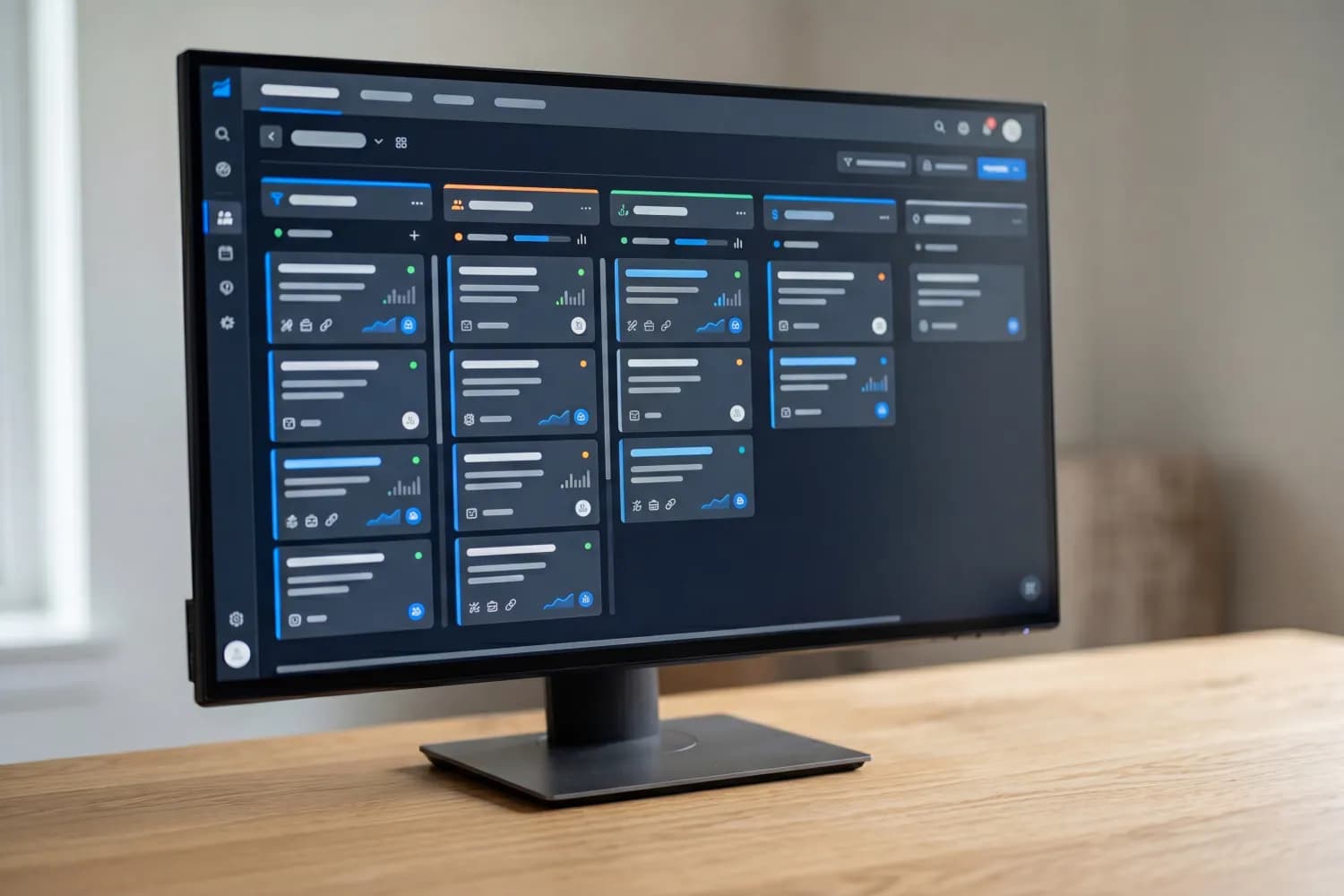
Conclusion: CRM as a Growth Engine
Automating the sales funnel is not just a matter of interface convenience, but a necessity for business survival in 2025. Plugging leaks in the lead processing pipeline allows generating more revenue with the same marketing spend. A CRM system handles the routine, disciplines the sales process, and provides leadership with tools to manage based on data rather than assumptions. Investments in automation pay off through improved conversion rates and reduced operating expenses, transforming the sales department from a cost center into a highly efficient revenue generator.
Related articles
Want to apply this to your operation?
EFRION builds the automations described here — across POS, warehouse, and back-office operations.
Request a demo