Fast Month-End Close: Why a 20-Day Cycle is a Management Problem, Not an Accounting One
The median monthly close takes 6.4 calendar days (APQC). We break down how ERP automation shortens reporting prep timelines and eliminates spreadsheet errors.
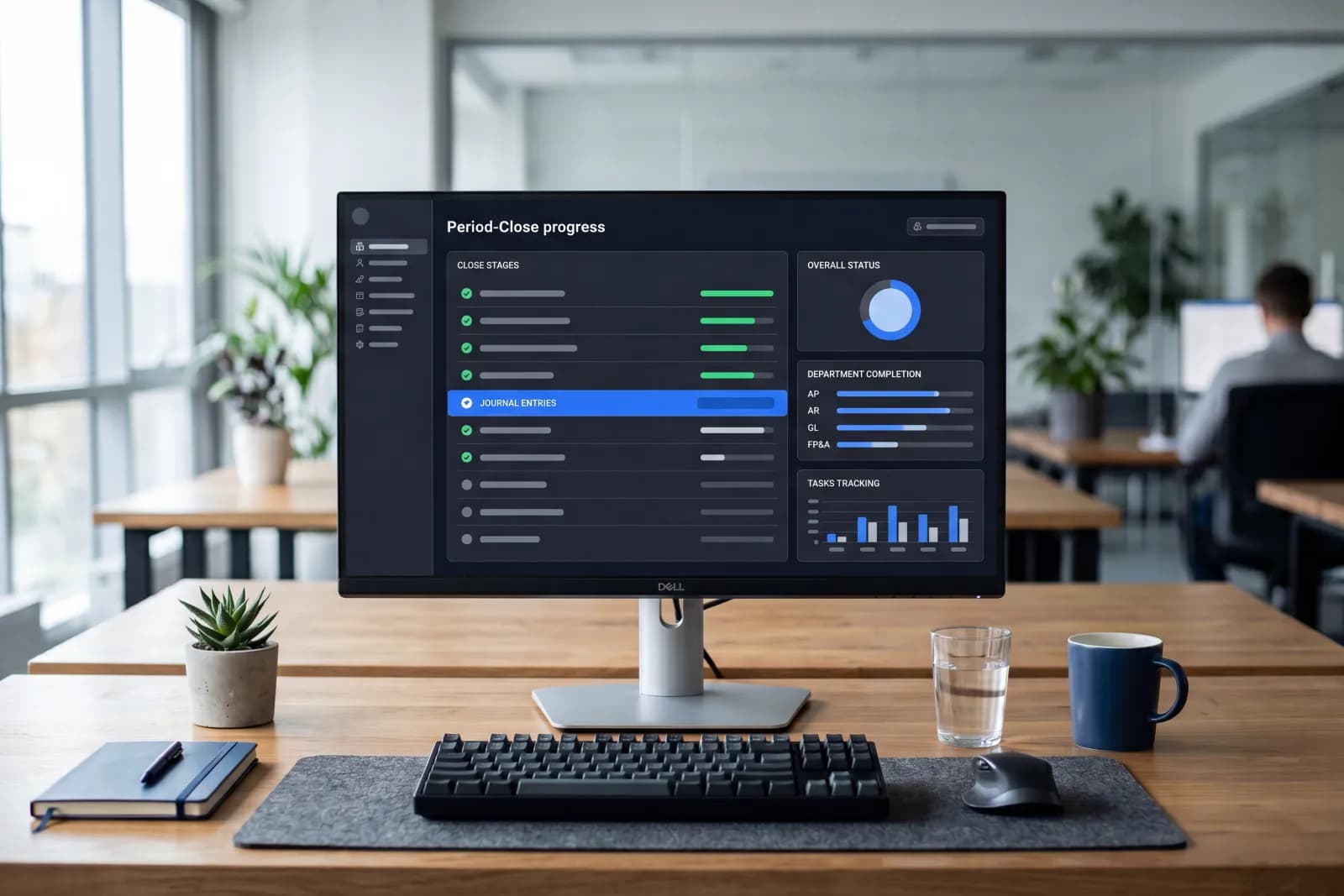
The speed of financial reporting preparation is one of the most objective indicators of corporate governance quality. A company's ability to quickly close a period speaks to the health of internal processes and the reliability of the data architecture. Nevertheless, only 18% of finance teams are capable of executing a month-end close in 1–3 business days (Ledge, 2025).
Across 2,300 organizations in APQC's Open Standards Benchmarking, the median close takes 6.4 calendar days; the top quartile closes in 4.8 days or less, the bottom quartile needs 10 days or more (APQC). In Ledge's 2025 survey of finance teams, half take 6 days or more, and 27% take longer than a week (Ledge, 2025).
A protracted close is not merely an accounting quirk, but a symptom of system misalignment. If financial statements for May are only available to management on June 20th, the company is effectively steering the business while looking in the rearview mirror. Making decisions based on outdated data leads to cash flow gaps, frozen projects, and lost competitive momentum.
APQC Open Standards Benchmarking
Anatomy of Delays: Where Time Goes
Close delays are rarely linked to a lack of qualification in the finance department. The primary issue lies in data fragmentation and manual reconciliation.
In the same survey, 94% of teams use Excel in their close, and half name it a key reason the close runs slow. Cash reconciliation alone takes 20 to 50 hours a month (Ledge, 2025).
When data is exported from CRMs, warehouse modules, billing systems, and bank statements into separate files, accountants are forced to act as data routers. They manually match transactions, hunt down missing documents, and trace unidentified payments.
Action Plan for a 5-Day Month-End Close
Transforming the close process requires moving from 'collect and verify at month-end' to continuous accounting.
A roadmap to a fast close
- 1
A single source of truth
Direct ERP gateways to every transaction generator: a CRM sale posts revenue, a shipment writes off cost — no re-keying, so no re-keying errors.
- 2
Bank reconciliation automation
Bank exchange (Host-to-Host or API) loads statements daily and matches payments by rules; the controller handles only exceptions.
- 3
Parallel task execution
A modular, role-based ERP enforces a strict schedule: stages run in parallel, and a lagging branch triggers automatic escalation.
- 4
Standardized accruals and depreciation
Reserves, bonuses, depreciation and deferred taxes are computed inside the ERP — entries are generated on schedule, without Excel.
- 5
Source-document management
OCR and EDM-operator integration post documents the day they arrive; the algorithm matches the invoice to the order and posts on a full match.
1. Integration of systems as a single source of truth. The key step is eliminating intermediary spreadsheets. The ERP system must have direct integrations with all transaction engines. A sale in the CRM should automatically post a revenue accrual, and a warehouse shipment should immediately write off inventory cost. Without manual transfer there is no re-keying — and no re-keying errors.
2. Automating bank reconciliation. Cash reconciliation should not be a month-end event. Setting up direct data feeds with banks (Host-to-Host or APIs) allows the system to pull statements daily and auto-match payments based on pre-defined rules. The financial controller only steps in to handle exceptions that the algorithm could not match.
3. Parallel execution of tasks instead of sequential. In a manual paradigm, departments wait on each other: procurement cannot verify invoices until the warehouse closes inventory, and accounting cannot calculate product cost until procurement is done. Implementing a modular ERP with role-based access allows setting up a rigid closing schedule. Tasks run in parallel, and managers track the status of each stage in real time. If a branch delays submitting data, the system automatically triggers an escalation.
4. Standardization of accruals and depreciation. Calculating reserves, bonuses, depreciation, and deferred taxes is often done in Excel. Porting these calculations into the ERP allows generating journal entries on a schedule. The system itself amortizes pre-paid expenses proportionally to the days of the month, eliminating manual calculation.
5. Managing source documents. Waiting for original documents is a classic cause of missed close deadlines. Implementing Optical Character Recognition (OCR) for paper invoices and deep integration of electronic document exchange within the ERP allows posting documents on the day they are received. The algorithm matches the invoice against the purchase order, posting it automatically when there is a complete match without human intervention.
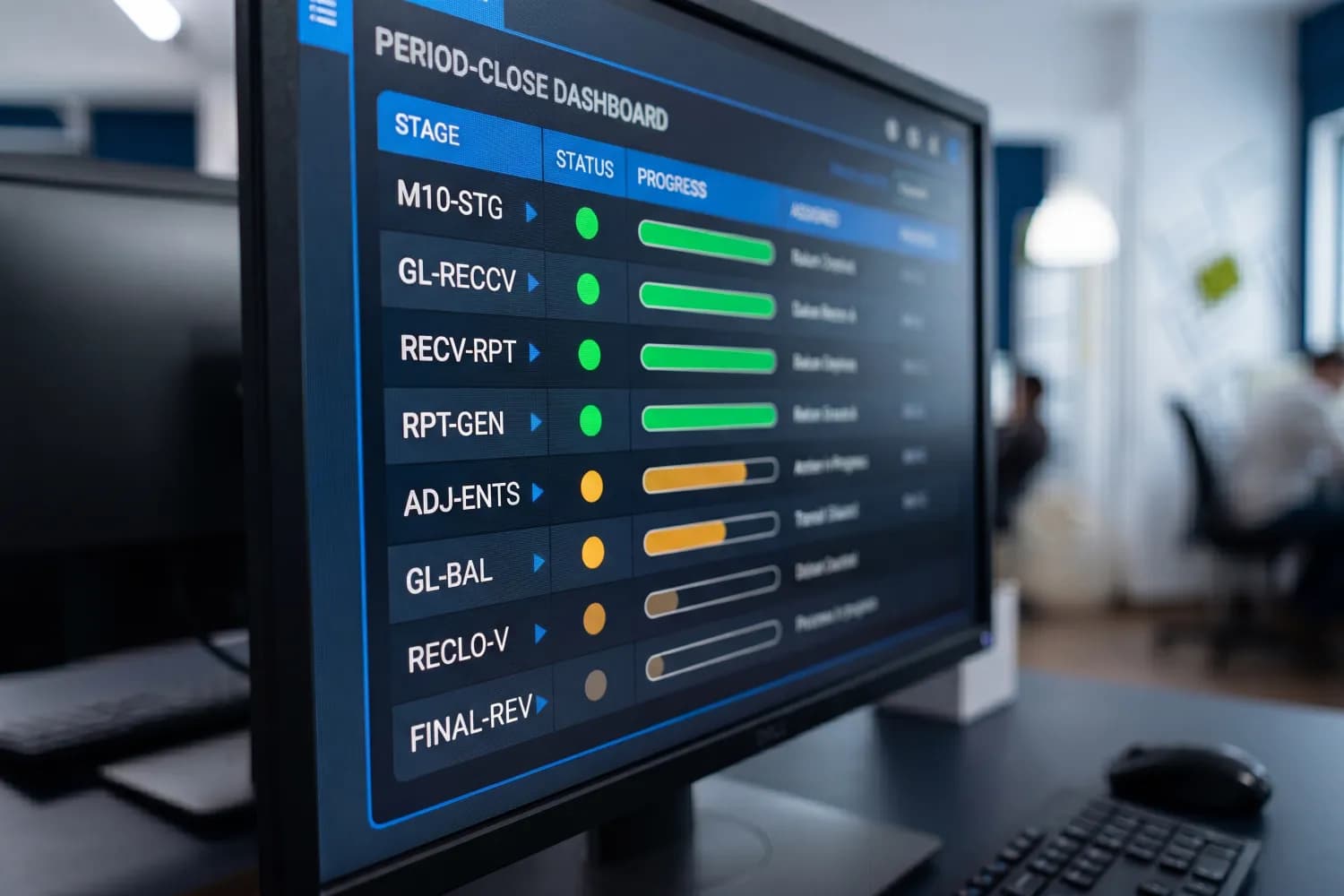
Financial Transparency as a Competitive Advantage
A shorter closing cycle changes what a CFO's team spends its time on. Instead of retrospectively hunting for errors, the department focuses on financial analysis, modeling, and business support. A fast close frees specialist time, lowers audit risks, and provides shareholders with a transparent view of capital movement exactly on time. A business managed with real-time metrics is able to respond to market changes faster than its competitors.
Related articles
Want to apply this to your operation?
EFRION builds the automations described here — across POS, warehouse, and back-office operations.
Request a demo