Salon No-Shows: How Online Booking and Deposits Reduce Missed Appointments
Every no-show is an hour of a stylist's time that cannot be resold. How online booking, deposits and auto-reminders cut these losses.
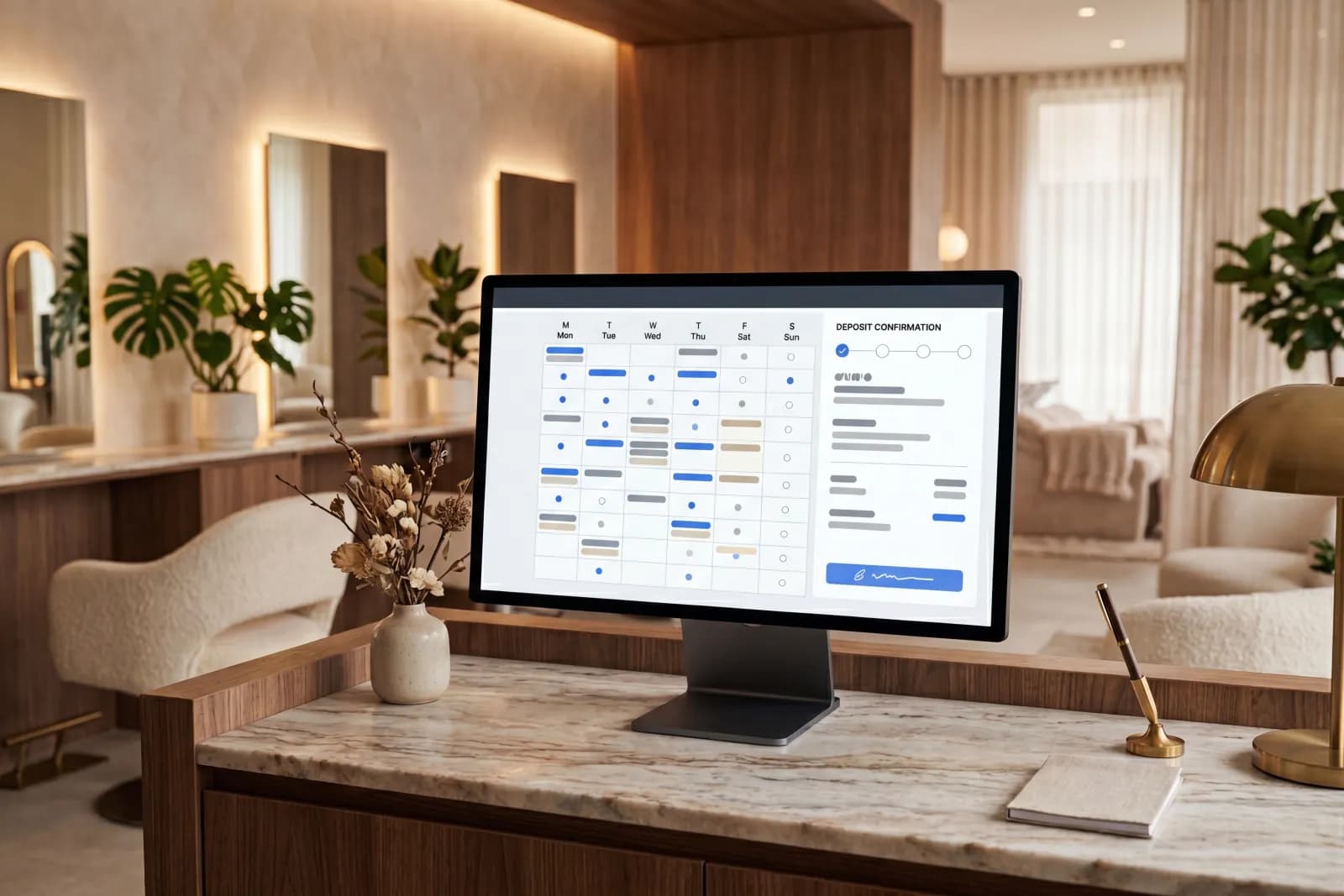
Economics of the Empty Chair in the Beauty Industry
For a beauty salon owner, a stylist's time is the most expensive and perishable inventory. Unlike retail, where unsold items remain on shelves, a stylist's idle hour due to a client no-show cannot be recovered later. According to the Zenoti 2025 Beauty & Wellness Benchmark Report, the average no-show rate is 3% in salons and 5% in medspas. That is an industry average: for a salon with high fixed costs (rent, utilities, salaries), every empty hour comes straight out of profit.
The no-show problem is not just direct idle-time losses. It demotivates top stylists who lose commission earnings, and leads to missed opportunities from clients who were turned away due to a lack of open slots. In 2025, the fight against no-shows shifts from personal reception appeals to rigid technological algorithms and automation.
Why Clients Do Not Show Up: Psychology and Processes
The main cause of no-shows is simple forgetfulness. In the fast-paced life of a modern city, an appointment booked two weeks ago easily slips from memory if the salon fails to send a reminder. However, there are deeper reasons. The lack of financial accountability (deposits) creates an illusion of a 'non-binding' visit. Clients subconsciously assume their absence does no harm because 'you are always busy anyway.'
Another factor is cancellation complexity. If cancelling requires making a phone call and explaining reasons to the receptionist, many clients choose to simply ignore the visit to avoid discomfort. Many clients would rather cancel or reschedule with a text message or a tap in an app than make a phone call. Paradoxically, automating this process improves client discipline.
Online Booking as the First Filter of Accountability
Implementing an online booking module on the website and social media is not just a 24/7 convenience, but a powerful tool for discipline. When booking independently, clients choose their times more deliberately. Choosing a slot online requires active engagement and a look at one's own calendar.
Online booking engines enable immediate application of cancellation policies. Before confirming a booking, the client must check a box agreeing that cancellation less than 24 hours in advance may result in restrictions or fees. Clearly written rules, visible at the time of booking, turn the visit into a commitment rather than a loose intention.
Multichannel Notifications: The Power of Timely Reminders
Automated reminders are the gold standard for combating no-shows. However, effectiveness depends on the communication channel. Traditional SMS works without any app, while messengers (WhatsApp, Telegram) allow for two-way dialogue. The ideal scenario involves three touchpoints: immediately post-booking (confirmation), 24 hours prior (requesting confirmation via a reply), and 2 hours prior (final reminder with directions).
Using AI bots to process confirmations allows the receptionist to focus on in-salon guests rather than calling database contacts. If a client taps 'Cancel' in a 24-hour notification, the system instantly frees up the slot in the schedule and offers it to clients on the waitlist.
How to close the no-show revenue leak
- 1
24/7 online booking
Self-service slot selection requires checking one’s own calendar — the client picks a time deliberately.
- 2
Visible cancellation rules
Agreeing to the Cancellation Policy at booking turns the visit into a commitment.
- 3
Multichannel reminders
Three touches (after booking, 24 and 2 hours out); cancelling or rescheduling takes a text, not a call.
- 4
Deposit or card hold
A token deposit or a penalty hold on the card; for premium and medical beauty it’s a must.
- 5
Waitlist and "hot" slots
A freed window is instantly offered to the waitlist; a discount for the next few hours helps fill the empty chair.
Deposits and Pre-Authorizations: Financial Protection
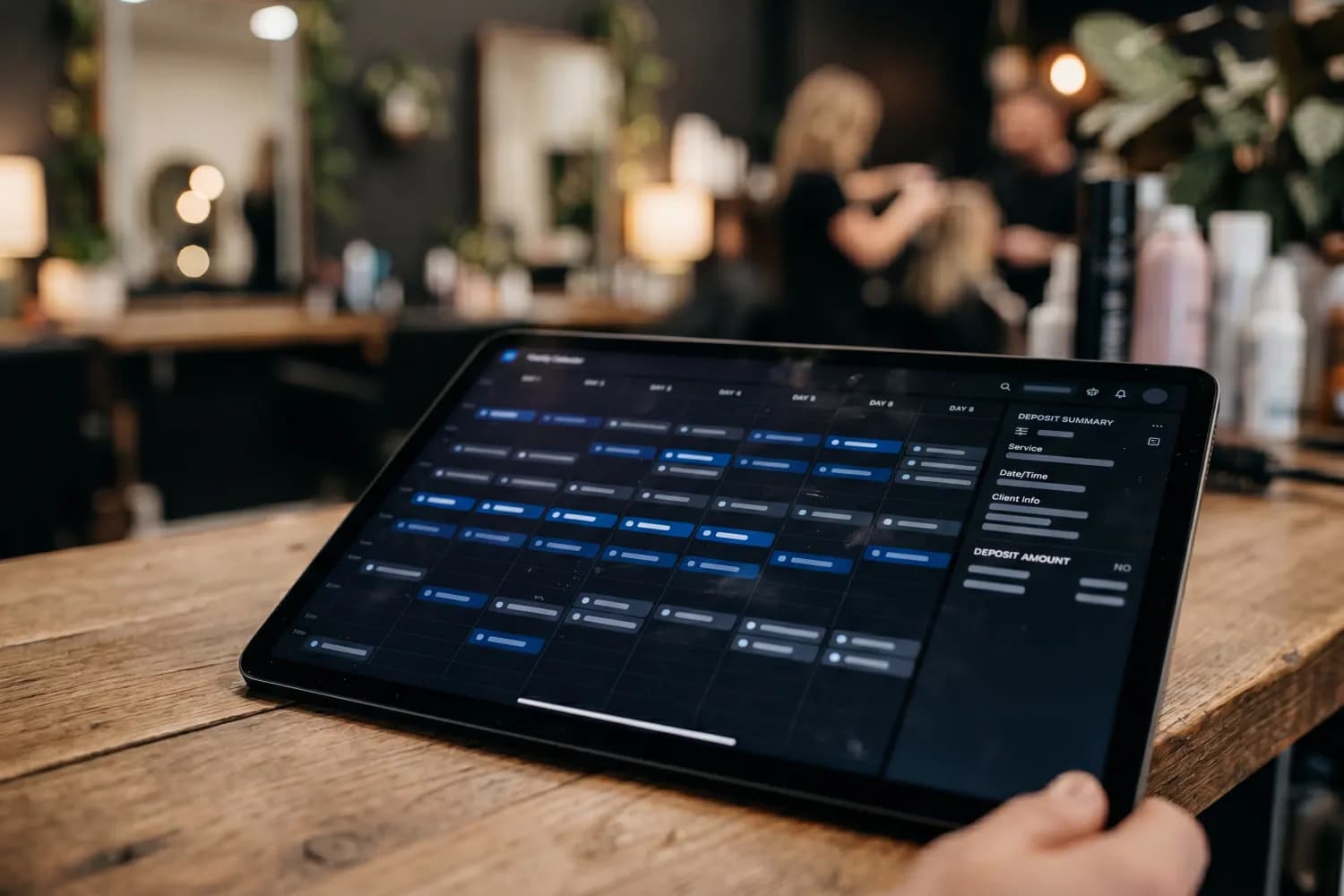
The most direct and effective method to eliminate no-shows is introducing prepayments or deposits. Many owners fear this will scare clients away, but a deposit only filters out bookings made without the intent to come. Even a nominal deposit turns a booking into a commitment: the client now has something to lose by not showing up.
An alternative option is card pre-authorization (holding funds) without an actual charge. The system verifies card validity and reserves the no-show fee amount in accordance with the salon's rules. For the premium and medical-beauty segments, where a stylist's hourly rate is particularly high, this measure becomes essential for survival.
«A salon that values its stylists’ time commands more respect from its clients.»
Waitlists and Last-Minute Slots
An automated waitlist turns cancellations into opportunities. When a slot opens up, the system automatically notifies clients who previously wanted that time but couldn't get it. A personal offer like 'We have an opening with your stylist today at 3:00 PM' is perceived as care, not spam.
To fill slots at the last minute, dynamic pricing can be used. Automatically distributing a discount offer of 10–15% for a visit 'within the next 3 hours' helps quickly find a client for an empty chair. This is particularly relevant for services with low consumable costs (haircuts, massage). A digital waitlist turns a late cancellation into a filled slot instead of lost revenue.
Conclusion: Stability Through Automation
Fighting no-shows is not about fighting the client; it is about establishing clear, professional rules of engagement. A salon that values its stylists' time commands more respect from consumers. Booking automation, notification systems, and financial guarantees (deposits) create a protective barrier for business profits. In 2026, a successful salon is defined not only by quality services but by flawless operational logistics that leave no room for empty chairs and accidental losses.
Related articles
Online Booking for Beauty Salons: How Many Customers You're Losing Without It
Salon Loyalty Programs: Which Mechanics Actually Work
Loyalty Scoring and Churn Prediction: How AI Identifies the Client Who's Leaving 30 Days Before They Go
Want to apply this to your operation?
EFRION builds the automations described here — across POS, warehouse, and back-office operations.
Request a demo