Customer Retention in Fitness Clubs: How to Stop Profit Leaks and Boost LTV
Bain & Company research links retaining 5% more customers to 25–95% higher profits. Learn how automation preserves fitness club member LTV.
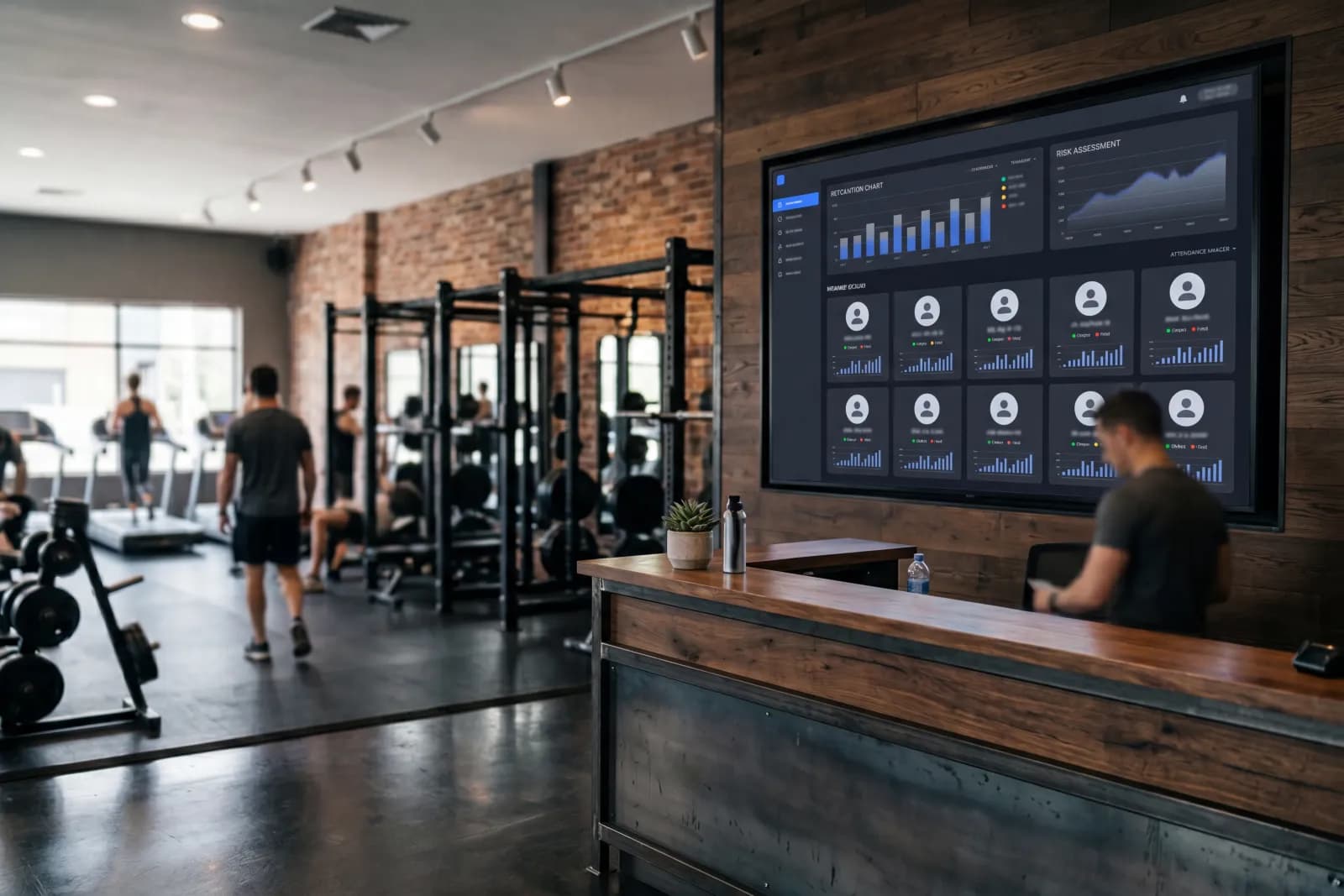
The economics of the fitness industry in 2024–2025 are undergoing a fundamental transformation. Retention strategies have become the primary lever for profitability. For a club owner, the key metric is no longer the number of memberships sold, but Customer Lifetime Value (LTV). When a member stops attending, the business loses not only their monthly fee but also potential revenue from ancillary services.
The retention issue is often hidden within invisible processes. A club may have a stable flow of inbound leads, but if the annual Churn Rate exceeds 40–50%, the business is operating like a leaky bucket. To shift this dynamic, it is necessary to analyze loyalty loss points in detail and implement mechanisms that make the member's journey in the club deliberate and results-driven.
LTV Loss Points: Where Clubs Lose Money During Onboarding
The first 30–60 days are critical for long-term retention. If a new member visits only a handful of times in the first month, the habit never forms, and the renewal decision is effectively made by default. The primary reason is the lack of a formed habit and a sense of progress. Club owners often make the mistake of viewing the membership sale as the final touchpoint, whereas it is actually just the start of the retention process.
During onboarding, LTV leaks away due to a lack of personalized guidance. A customer left alone with the fitness equipment quickly loses motivation. Group programs or personal training in the first two weeks give a newcomer a schedule and a person who notices when they stop coming. Without digital monitoring at this stage, managers cannot see which newcomers have stalled and need a call or support.
An automation system allows tracking the activity of every new member in real time. If the system records a lack of visits for seven days post-purchase, the receptionist receives an automated task to reach out. This allows addressing churn at a stage when the customer has not yet made a final decision to leave. Such preventive contact costs one call; winning back a member who has been dormant for six months takes an offer and a campaign.
How to stop LTV leakage
- 1
Personalized onboarding
The first 30–60 days decide it: if a newcomer visits only a handful of times in the first month, the habit never forms — they need an adaptation plan, not "sold and forgotten".
- 2
Risk-zone segmentation
The base is split by visit frequency into green, yellow and red zones; targeted engagement keeps the yellow zone from sliding into red unnoticed.
- 3
Automated reactivation triggers
No visits for 7 days after purchase — a contact task is assigned to staff; a preventive call is simpler than winning back a member dormant for six months.
- 4
Add-ons as a loyalty anchor
An add-on gives a member one more reason to come; bioimpedance every 4–6 weeks gives visual proof of results.
- 5
Gamification and community
Leaderboards, challenges and social ties bind loyalty to the brand, not the trainer: "club friends" have a reason to come back.
Digital Attendance Monitoring as a Churn Prevention Tool
Attendance frequency is the leading indicator of retention. Clubs set a frequency threshold — for example, two visits per week — and treat a drop below it as an early warning. The issue with many clubs is that they only notice a problem when the membership expires. At that point, winning the customer back is nearly impossible: they have already justified their passivity or chosen an alternative activity format.
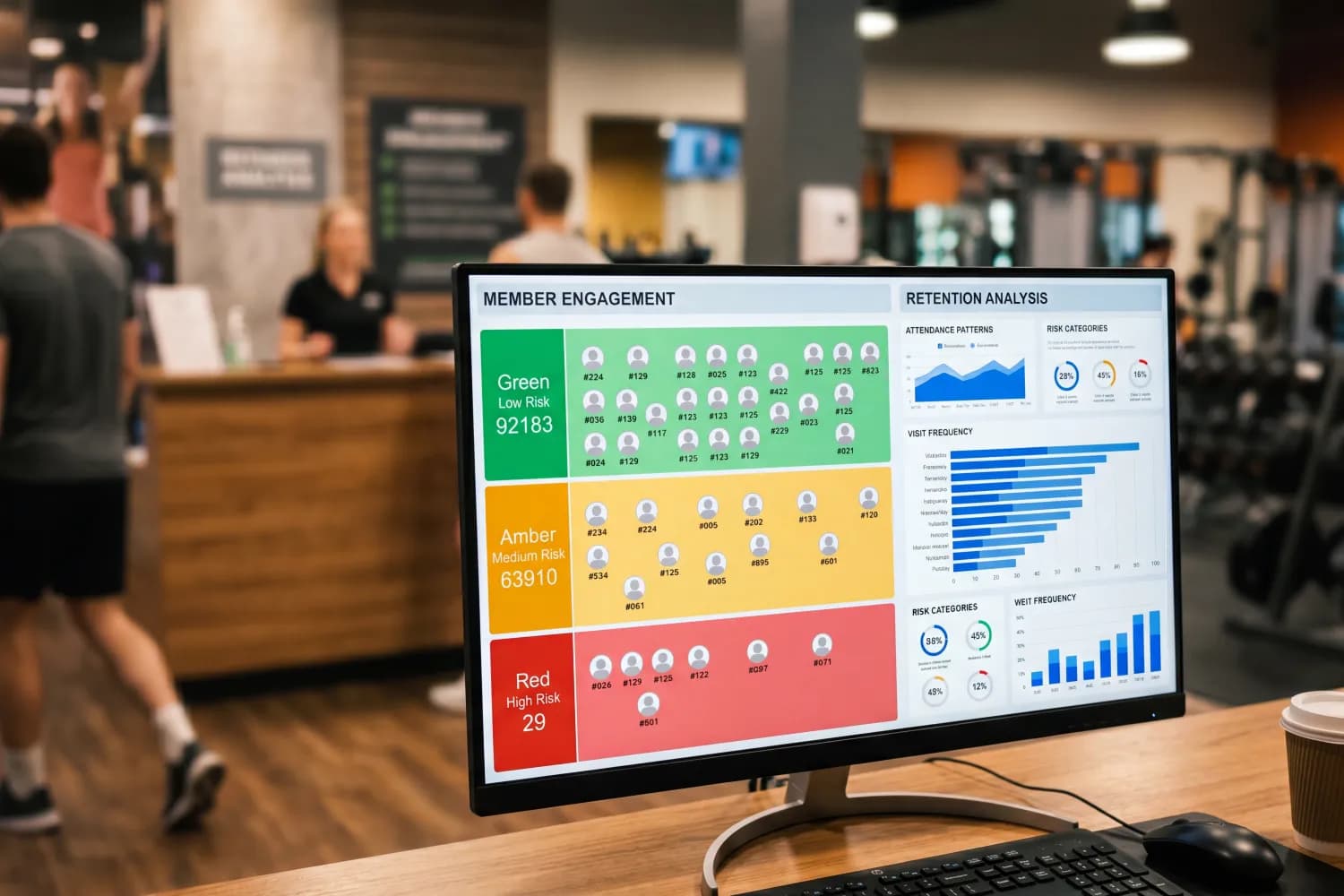
Effective retention requires shifting from a reactive model to a proactive one. Using end-to-end attendance attendance analytics allows segmenting the member database into risk cohorts:
- Green zone: more than 8 visits per month (low risk).
- Yellow zone: 4–6 visits (moderate risk, engagement required).
- Red zone: fewer than 3 visits or absence of more than 10 days (high risk).
Automated access control and workout tracking systems provide the owner with precise numbers for each segment. Instead of mass email blasts that annoy loyal customers, the business can target bonuses or motivational meetings to those in the yellow zone. This keeps yellow-zone members from sliding into the red zone unnoticed.
Impact of Ancillary Services on Financial Stability and Loyalty
Secondary sales (personal training, juice bar, spa, body composition analysis) directly correlate with retention rates. A member who uses at least one ancillary service has more reasons to stay than one who only pays for a basic membership: deeper integration into the club's ecosystem and social ties.
However, in many clubs, the ancillary service sales process is unstructured. Trainers often act as floor attendants, lacking tools to record client progress and suggest targeted solutions. Implementing mobile apps for trainers and clients puts sales on a data-driven path. For example, logging bioimpedance analysis (body composition testing) results every 4–6 weeks provides the client with visual proof of their results, which is a powerful retention factor.
Ancillary revenue helps offset rising costs. Automating bar inventory tracking and spa scheduling closes the losses that go unrecorded when these departments run on paper.
Gamification and Community Management: Long-Term LTV Drivers
Social interaction is one of the most underestimated factors in fitness business management. Members who have 'club friends' have a reason to come back that has nothing to do with equipment. In a highly competitive market where equipment is virtually identical across chains, the community becomes the unique selling proposition that cannot be copied.
In 2025, gamification is becoming the standard for retention. Leaderboards for calories burned, steps taken, or workouts attended, accessible in the mobile app, create a healthy competitive element. This is especially relevant for a club owner seeking to reduce dependence on the charisma of individual trainers. When the engagement system is embedded in the club's tech stack, loyalty ties to the brand rather than the instructor's personality.
Active app users — booking classes, viewing programs, joining challenges — stay in contact with the brand even outside the club's walls.
«Retaining just 5% more customers can raise profits by 25–95%.»
Financial Audit of the Retention System: Metrics You Cannot Ignore
To objectively evaluate the effectiveness of a retention strategy, the owner must monitor three basic financial metrics:
- Member Churn Rate (MCR)—percentage of members leaving the club during a period.
- Revenue Churn—lost revenue from departed customers. Helps understand the real financial impact of churn.
- Customer Lifetime Value (LTV)—the total profit a customer generates during their entire relationship with the club.
Bain & Company research by Frederick Reichheld found that retaining just 5% more customers can raise profits by 25–95% (Reichheld & Schefter, «E-Loyalty: Your Secret Weapon on the Web», Harvard Business Review, 2000). The mechanism: loyal customers are cheaper to serve, purchase ancillary services more frequently, and act as free brand ambassadors.
Automated reporting shows these metrics in real-time dynamics. If the Customer Acquisition Cost (CAC) is rising while LTV is falling, it is a signal to immediately review operational processes. In 2025, a fitness club operating without deep data analytics is financially vulnerable because it cannot compete in marketing budget efficiency with tech-enabled players.
Conclusion: Automation as the Foundation of Predictable Revenue
Member retention in fitness clubs in modern conditions is impossible without integrating all business processes into a single digital environment. Manually managing Excel spreadsheets does not allow for quick reactions to changes in member behavior and churn prevention. End-to-end tracking of visits, sales, and staff activity creates a transparent picture where every management decision is backed by numbers rather than intuition.
Investments in retention and automation pay off through lower operational losses and higher LTV; how fast depends on the club's starting point. In the end, the club that knows its customer best and can timely offer value extending beyond simple gym access wins. The stable revenue of a fitness business is built on the predictability of audience behavior, and this predictability is provided only by high-quality data collection and interpretation.
Related articles
Online Booking for Beauty Salons: How Many Customers You're Losing Without It
Salon Loyalty Programs: Which Mechanics Actually Work
Loyalty Scoring and Churn Prediction: How AI Identifies the Client Who's Leaving 30 Days Before They Go
Want to apply this to your operation?
EFRION builds the automations described here — across POS, warehouse, and back-office operations.
Request a demo